symptoms
Why is my dishwasher not draining?
Standing water after a cycle is usually a clogged filter, a blocked drain hose or sink connection, or a jammed drain pump. What is normal, what to check first, and what a repair costs.
By Appliance Guardian · Updated · 5 min read
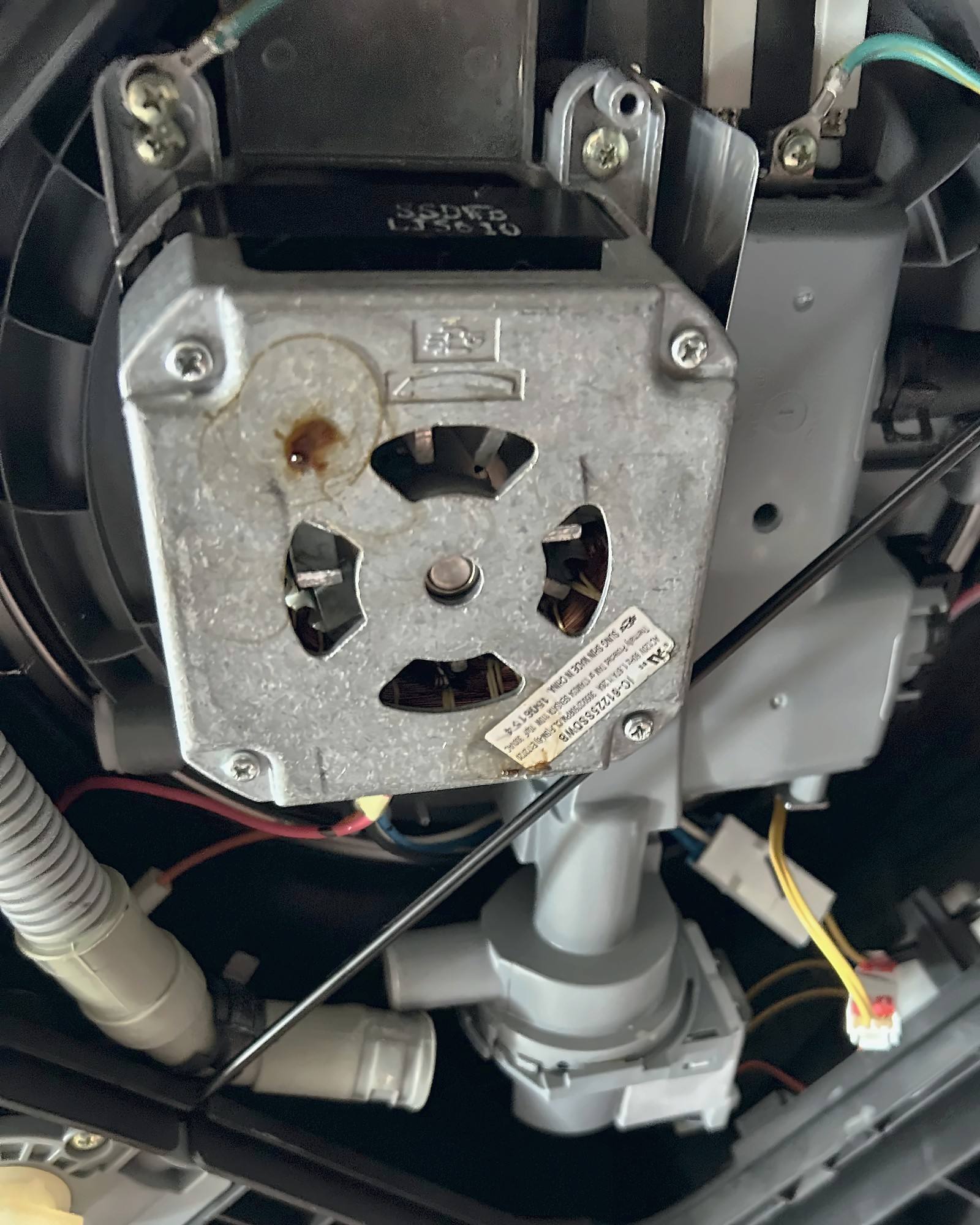
A dishwasher that will not drain is most often blocked rather than broken. The most common causes, in order, are a clogged filter or debris in the sump, a kinked or blocked drain hose, a blockage where the hose meets the sink drain, air gap or garbage disposal, and a jammed or failed drain pump. Cleaning the filter and checking the hose and sink drain are safe homeowner jobs. The pump and controls are a job for a technician.
Is some water in the bottom normal?
Yes, a little. GE says that on its models 1 to 2 cups of clean water covering the bottom of the tub is normal, and on models with an Ultra Fine filter some water in the sump (the filter area) is normal. Dirty water, water above the filter, or water that grows from one cycle to the next means it is not draining.
Why is my dishwasher not draining?
Water leaves through the filter, into the sump, through the drain pump and out the drain hose to the sink plumbing. A blockage anywhere on that path stops it. Whirlpool’s drain guide lists the same path in order:
- Clogged filter. Food, grease and labels collect in the filter at the bottom of the tub.
- Debris in the sump. Seeds, toothpicks, broken glass and labels can sit under the filter and block the pump inlet.
- Kinked, crushed or sagging drain hose, often after the dishwasher was pushed back into place.
- Hose routing. The hose needs a high loop fixed to the underside of the counter, or a working air gap, so dirty water cannot run back in.
- Garbage disposal. If a disposal was recently installed, the knockout plug inside its dishwasher inlet may still be in place. Whirlpool notes that a plug left in blocks drainage completely.
- Sink drain. A clogged tailpiece or trap under the sink backs up into the dishwasher.
- Drain pump. A steady hum with no water moving points to a jammed impeller. No pump sound at all during drain points to the pump, its wiring or the control.
- Too much or the wrong detergent. GE notes that over-sudsing can stop a dishwasher draining properly.
| What you notice | Likely cause | Safe to check yourself? |
|---|---|---|
| Water sits on the filter, food on top | Clogged filter | Yes |
| New disposal, dishwasher never drained since | Knockout plug still in | Yes, with the power off |
| Sink also drains slowly | Sink trap or tailpiece blockage | Yes |
| Humming during drain, no water moving | Jammed drain pump impeller | Only the pump cover, if your manual shows it |
| Silence during drain, no error cleared by reset | Drain pump, wiring or control | No, call a technician |
What can I safely check before calling?
Turn the dishwasher off at its breaker or unplug it first. Bosch warns that debris in the sump may be sharp, so wear gloves and remove broken glass carefully.
- Bail out the standing water with a cup and a sponge, and put a towel down.
- Remove and clean the filter. Rinse it under warm water with a soft brush. Reinstall it exactly as your manual shows, because a loose filter lets debris into the pump.
- Look into the sump with a flashlight and pick out anything solid.
- Check the pump cover if your manual shows how. Bosch and some other brands have a clip-off cover over the drain pump. Clear debris from under it by hand.
- Check the hose under the sink for kinks, and confirm it rises in a high loop to the underside of the counter, or that the air-gap cap on the sink is clear.
- Run the garbage disposal if you have one, and check the sink drains freely. If the disposal is new, check for the knockout plug.
- Restore power and run a short rinse or drain cycle.
When should I leave it to a technician?
- Pulling the dishwasher out from under the counter. It means shutting off the water and power supply and disconnecting both.
- Replacing the drain pump, check valve or drain hose.
- Water that will not drain after the checks above, or a repeating drain error code.
- Any leak onto the floor, or water near wiring. Turn the power off at the breaker first.
What does a technician test?
A technician confirms whether water reaches the pump and whether the pump runs. That means clearing the sump, spinning the pump impeller to check for a jam, measuring voltage at the pump during a drain step, and testing the pump motor. If the pump is sound, they check the check valve, the hose along its full length, and the connection to the sink or disposal. Where the dishwasher shows an error code, it is read against the maker’s service data, not guessed.
How much does it cost to fix in Toronto?
Common dishwasher repairs, such as drainage, latch, filling and wash-performance faults, are estimated at $160–$400 including parts and labour, plus HST. That is a planning range, not a diagnosis. The diagnostic visit is $89 + HST, waived when you go ahead with the quoted repair, and you get the quote before any repair starts. See dishwasher repair for the brands we service, including Bosch, Whirlpool, KitchenAid, GE, Samsung and LG.
Repair or replace?
A drain pump or hose on an otherwise sound dishwasher is usually a contained repair. A rusted-through tub, a failed control board on an older model, or several faults at once make replacement worth weighing. You get the quote first and decide.
When should I stop using it?
- Stop running cycles while water is sitting in the tub. Each new fill adds water that cannot leave.
- If water reaches the floor, turn the dishwasher off at the breaker and shut its water supply valve, usually under the sink.
- Stop if you smell burning or the breaker trips.