symptoms
Why is my electric dryer not heating?
An electric dryer that tumbles but stays cold usually has a half-tripped breaker, a blocked vent that blew the thermal fuse, or a failed heating element. Safe checks, repair costs, and a note on gas dryers.
By Appliance Guardian · Updated · 5 min read
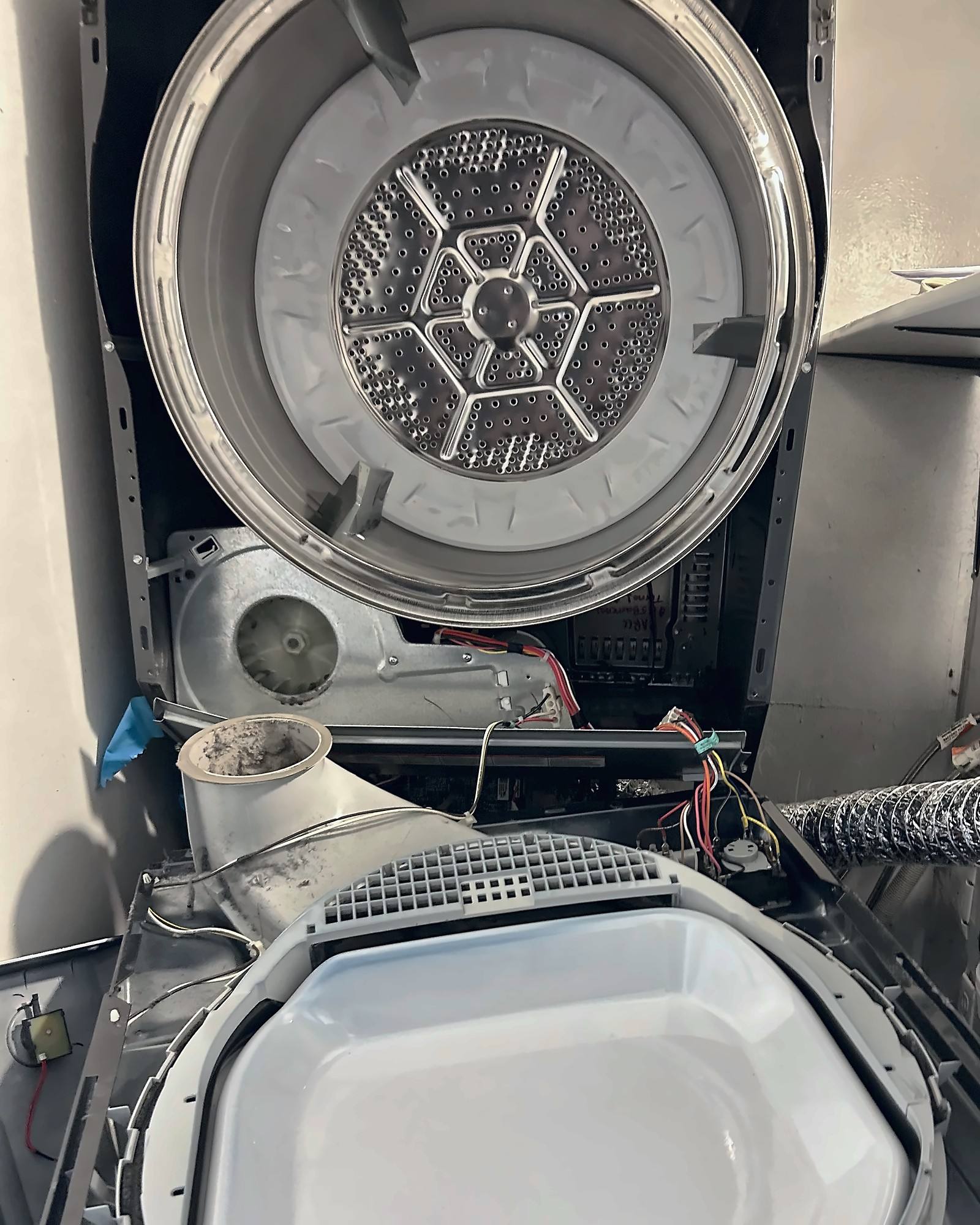
An electric dryer that tumbles but gives no heat most often has one of four problems. In order, they are a circuit breaker that has tripped on one side only, a heat-free cycle selected by mistake, a blocked vent that has overheated the dryer and blown its thermal fuse, or a failed heating element. Resetting the breaker, checking the cycle and cleaning the lint screen and vent are safe to do yourself. Parts inside the cabinet are a job for a technician.
This guide is for electric dryers only. Appliance Guardian does not work on gas dryers. If you smell gas, leave the home and call your gas utility or 911 from outside.
Why does my dryer spin but not heat?
An electric dryer runs on 240 volts from a double-pole breaker, which is two breakers joined together. Whirlpool says electric dryers need a separate 30-amp circuit fused on both sides of the line. The drum motor and controls run on one 120-volt side. The heating element needs both.
So if one side trips, the dryer still turns on and tumbles, but it cannot heat. GE puts it the same way: an electric dryer may run on a partial voltage of 120 volts, but it will not heat without a 208 V or 240 V supply. A breaker can be partly tripped and still look normal.
If the power is fine, the heat circuit itself has opened somewhere:
- Thermal fuse. A one-time safety fuse that cuts the heat, and on many models the motor, if the dryer overheats. It does not reset. A blown fuse almost always means the airflow is restricted.
- Heating element. A coil of resistance wire that can break or short to its housing.
- High-limit thermostat and cycling thermostat. These switch the heat off at set temperatures. A failed one can keep the heat off entirely.
- Timer or control board, or a burnt wire at the terminal block.
| What you notice | Likely cause | Safe to check yourself? |
|---|---|---|
| Tumbles, no heat at all, after a storm or power blip | One side of the breaker tripped | Yes, reset it |
| No heat on one cycle only | Air-only or fluff cycle chosen | Yes |
| Very long drying times, hot top, lint behind the dryer | Blocked vent | Lint screen and duct, yes |
| No heat on any cycle, breaker fine | Thermal fuse, element, thermostat | No, call a technician |
| Burning smell, scorch marks at the cord | Terminal block or cord fault | No, stop using it |
What can I safely check before calling?
- Reset the breaker fully. At the panel, switch the dryer’s double breaker all the way off, then back on. A half-tripped breaker does not always look tripped.
- Check the cycle. Whirlpool notes that Air Only and Air/Fluff cycles never add heat. Try a normal timed dry on high.
- Clean the lint screen before every load, as the manual says.
- Check the vent outside. With the dryer running, you should feel strong airflow at the outdoor hood. Whirlpool says the vent from the dryer to the outside needs cleaning every one to two years, or sooner if drying slows down.
- Straighten the duct behind the dryer. Crushed or kinked foil duct is a common restriction. Unplug the dryer before you pull it out.
The vent matters for more than drying time. The U.S. Fire Administration reports that failure to clean was the leading factor in home clothes-dryer fires (31%) from 2018 to 2020.
When should I leave it to a technician?
- Opening the dryer cabinet to test or replace the thermal fuse, element or thermostats.
- Anything at the power cord terminal block or the 240 V outlet. If the outlet or wiring looks burnt, call a qualified electrician.
- Replacing a blown thermal fuse without finding out why it blew. A new fuse on a blocked vent will blow again, and the overheating is the real hazard.
- Any gas dryer. We do not service gas appliances.
What does a technician test?
With the dryer unplugged, a technician measures continuity across the thermal fuse, the high-limit and cycling thermostats, and the heating element, and checks the element for a short to its housing. With power restored, they confirm 240 V at the terminal block and at the element circuit during a heat cycle, and check the timer or control is calling for heat. They also check the airflow through the lint duct and vent, because that is usually what blew the fuse.
How much does it cost to fix in Toronto?
Common electric dryer repairs, such as heating, belt and roller faults, are estimated at $150–$350 including parts and labour, plus HST. That is a planning range, not a diagnosis. The diagnostic visit is $89 + HST, waived when you go ahead with the quoted repair, and you get the quote before any repair starts. See electric dryer repair for the brands we service, including Whirlpool, Maytag, Samsung, LG and GE.
Repair or replace?
A thermal fuse, element or thermostat on an otherwise sound dryer is usually a contained repair. A failed control board or drum damage on an older dryer makes replacement worth weighing against the quote. The diagnosis tells you which case you are in.
When should I stop using it?
- Stop if you smell burning, see scorching at the cord or back panel, or the breaker keeps tripping.
- Stop if the top or sides get unusually hot, or clothes come out much hotter than normal. That points to a blocked vent or a failed thermostat.
- Don’t keep running a dryer that has lost its heat until the cause is known. If the thermal fuse blew, what caused the overheating is still there.