symptoms
Why is my fridge not cooling but the freezer is fine?
A warm fresh-food section with a cold freezer usually means cold air is not moving between them. The likely causes, the safe checks to do first, and what a repair costs in Toronto.
By Appliance Guardian · Updated · 5 min read
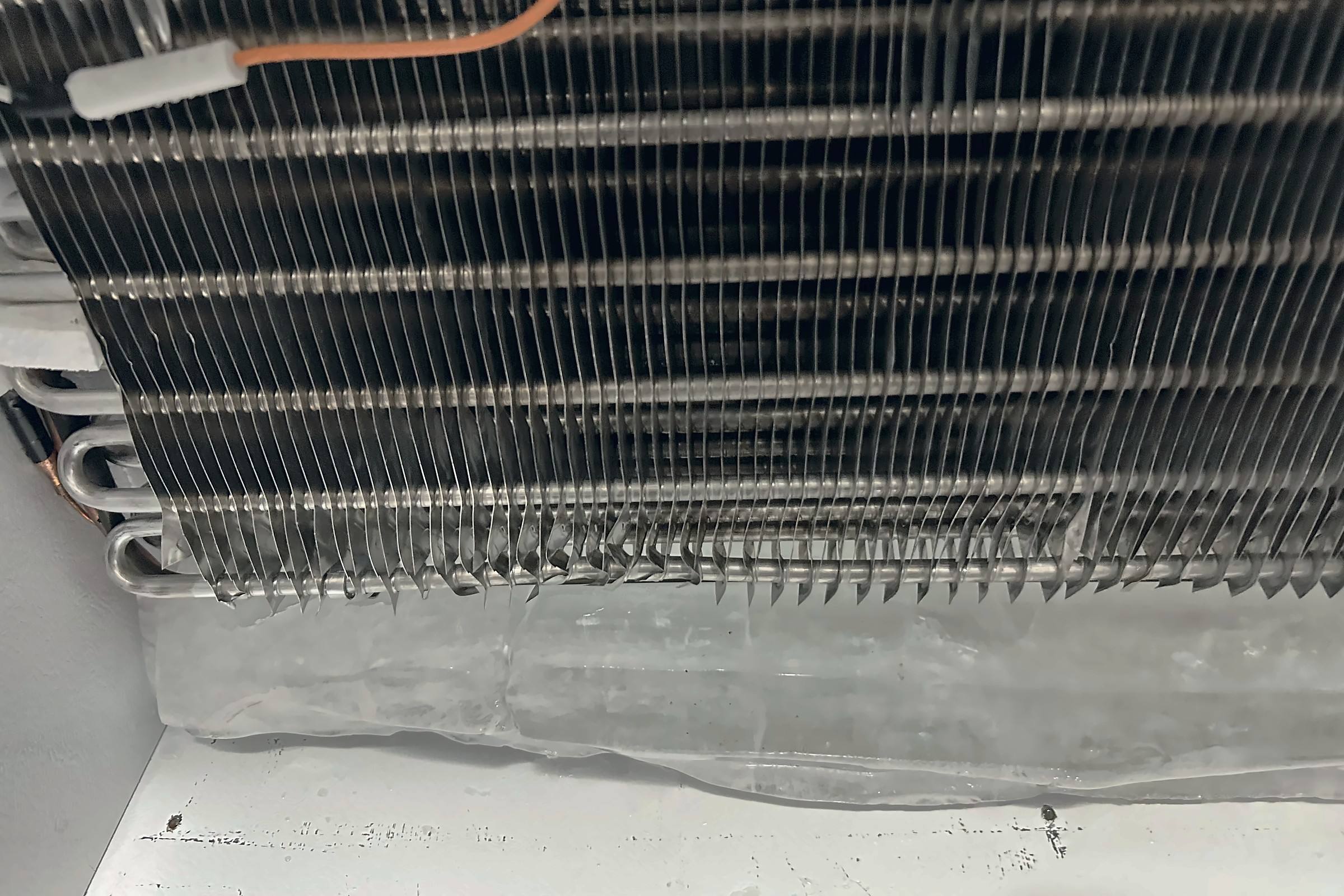
When the fridge section is warm but the freezer is still cold, the refrigeration system is usually working and the problem is airflow between the two sections. The most common causes, in order, are blocked vents or a door that is not sealing, a stopped evaporator fan, frost built up on the evaporator coil because the defrost system has failed, and a damper stuck closed. You can safely check the settings, vents, door seals and fan sound yourself; anything behind the freezer’s back panel is a job for a technician.
Your fridge should hold 4 °C (40 °F) or lower and your freezer −18 °C (0 °F) or lower, according to Health Canada’s safe food storage guidance. Between 4 °C and 60 °C is the range in which bacteria grow quickly, so a fridge sitting above 4 °C needs attention even if the food still feels cool.
Why is my fridge warm but the freezer cold?
In most frost-free fridges, top-freezer, bottom-freezer, French-door and side-by-side, the cold is made in one place: the evaporator coil behind the freezer’s back panel. The evaporator fan blows air across that coil. Some of the air goes into the freezer, and some goes through a duct and an air damper into the fresh-food section.
The freezer sits right next to the coil, so it stays cold when that airflow slows, and the fridge warms up first. The usual reasons are:
- Blocked vents. Food or containers pushed against the air outlets. GE notes that large containers at the back can block the flow of cold air.
- Evaporator fan motor. If the fan stops, cold air stops reaching the fridge.
- Defrost fault. A frost-free fridge melts the frost off the coil several times a day using a defrost heater, controlled by a defrost thermostat or sensor and the control board or timer. If any of these fails, frost builds up until it chokes the airflow.
- Blocked defrost drain. The melt water freezes in the drain and ice builds up around the coil.
- Damper stuck closed. The air door into the fridge section stays shut.
Some models, including many Samsung and Sub-Zero fridges, have a separate evaporator and fan for the fresh-food section. The logic is the same: the fridge is warm because its cold air is not arriving.
| What you notice | Likely cause | Safe to check yourself? |
|---|---|---|
| Food pushed against the vents | Blocked airflow | Yes |
| Paper slides out of a closed door easily | Worn or dirty door gasket | Yes, clean it |
| Silence from the freezer when it should be running | Evaporator fan motor | Listen only |
| Frost or ice on the freezer’s back panel or vents | Defrost system fault | Look only |
| Water under the crisper drawers or ice in the freezer floor | Blocked defrost drain | Look only |
| Both sections warming, fridge clicking on and off | Compressor or start component | No, call a technician |
What can I safely check before calling?
Unplug the fridge before you clean anything near the coils or behind the kick plate. The checks below need no tools.
- Measure it. Put an appliance thermometer on the middle shelf for a few hours. Anything above 4 °C is too warm.
- Check the settings and display. A control knocked colder or warmer is common. Samsung says a display showing “OF OF” or scrolling bars means the fridge is in Cooling Off (showroom) mode and will not cool.
- Clear the vents. Samsung recommends keeping food about 5 cm (2 inches) clear of the interior vents.
- Test the door seals. Close the door on a strip of paper. If it slides out easily, clean the gasket with warm soapy water and check again. A torn gasket needs replacing.
- Check the clearance. GE asks for at least 2.5 cm (1 inch) of air space on each side, the top and the back, and a room between about 16 °C and 43 °C (60–110 °F). Samsung asks for 5 cm (2 inches). Your manual has the figure for your model.
- Listen for the fan. With the freezer door closed, you should hear a steady whirr from behind the freezer’s back panel while the fridge is running. On many models the fan stops when the freezer door opens, which is normal.
- Give it time after a change. GE says to wait 24 hours after adjusting the controls. Samsung says it can take up to 28 hours to reach a new setting.
When should I leave it to a technician?
- Removing the freezer’s back panel, or chipping or melting ice off the coil. A knife or screwdriver can puncture the coil, which turns a repair into a sealed-system job.
- Testing or replacing the evaporator fan motor, defrost heater, defrost thermostat or sensor, damper or control board.
- Anything involving the compressor or refrigerant. That is sealed-system work and is quoted separately.
What does a technician test?
A technician confirms the temperatures, then removes the freezer panel to see the frost pattern on the coil. Light, even frost is normal. A solid block of ice points to the defrost circuit, and the heater, thermostat or sensor and control are each tested with a meter. They also check the evaporator fan, the damper, the condenser fan and the compressor, so a cooling-system fault is not mistaken for an airflow one.
How much does it cost to fix in Toronto?
Common refrigerator repairs, such as fan, defrost and control faults, are estimated at $180–$500 including parts and labour, plus HST. That is a planning range, not a diagnosis. Sealed-system work (compressor or refrigerant) is quoted separately. The diagnostic visit is $89 + HST, waived when you go ahead with the quoted repair, and you get the quote before any repair starts. See refrigerator repair for the brands we service.
Repair or replace?
A fan motor or defrost part on an otherwise sound fridge is usually a contained repair. A sealed-system failure on an older fridge is a closer call against the price of a new one. The diagnosis tells you which case you are in before you spend on either.
When should I stop using it?
- If the fridge has been above 4 °C, move perishable food to a cooler with ice or to the freezer and judge what can be kept. Health Canada’s temperature limits are the guide.
- Unplug it and call if you smell burning, see scorching, or the breaker trips.
- If the fridge is clicking every few minutes and not running, unplug it. Repeated failed starts are hard on the compressor.