symptoms
Why is my electric oven not heating?
An electric oven that stays cold while the cooktop works usually has a failed bake element, a setting like Sabbath mode or delay start, or a faulty temperature sensor or control. Safe checks and repair costs.
By Appliance Guardian · Updated · 5 min read
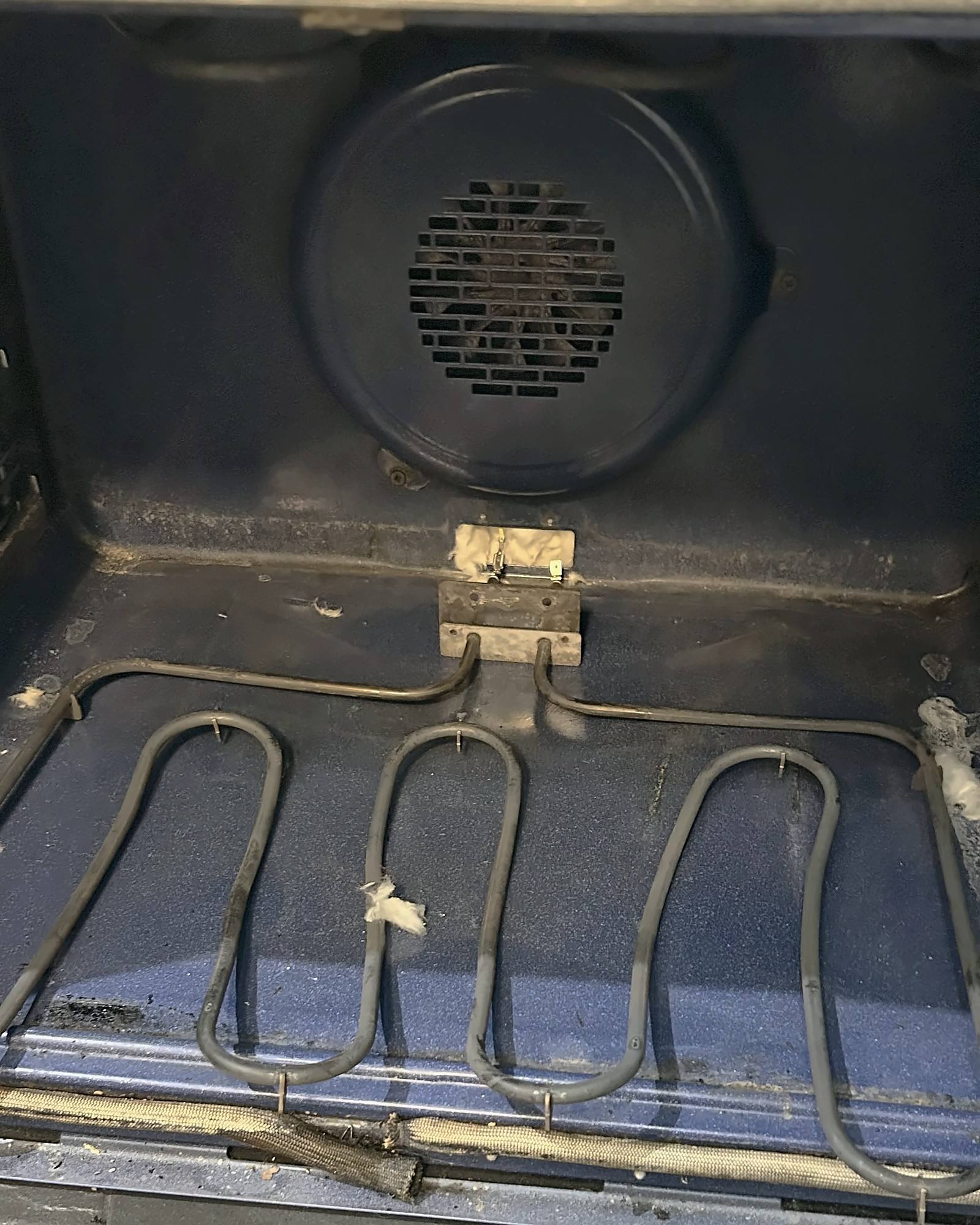
An electric oven that will not heat most often has a failed bake element. Before that, rule out a setting that stops it heating, such as control lock, delay start, Sabbath mode or demo mode, and a tripped breaker. After the element come the oven temperature sensor, the broil element, a relay on the control board, and a thermal cut-out. Settings, the breaker and a visual check of the element are safe homeowner checks. Testing and replacing parts is a job for a technician.
This guide is for electric ovens and ranges only. Appliance Guardian does not work on gas appliances. If you smell gas, leave the home and call your gas utility or 911 from outside.
Why is my oven not heating but the stovetop works?
The cooktop elements and the oven run on separate circuits inside the range. If the burners heat and the oven does not, the supply to the range is working and the fault is in the oven’s own circuit. On most electric ovens, baking uses the bake element on the floor of the oven (some hide it under a panel), with help from the broil element at the top and, on convection models, a rear fan element. GE’s guidance for this exact symptom is to check the controls are set for Bake or Broil, check the door latch is unlocked after a self-clean, check the knobs, and then inspect the bake element for cracks or breaks.
When an element fails, GE explains, it usually opens the circuit and no further heating takes place. It can also short out against its sheath, with sparks for a few seconds and a burning smell. GE recommends not using the oven if the bake or broil element fails, and notes the surface burners are unaffected.
| What you notice | Likely cause | Safe to check yourself? |
|---|---|---|
| Display shows a lock icon, “Sabbath”, “Sab” or demo | A control setting | Yes |
| Nothing works at all, display dark | Breaker, fuse or supply | Breaker, yes |
| Bake element stays dark, blistered or split | Failed bake element | Look only, breaker off |
| Heats, but far too slowly or overshoots | Temperature sensor or control | No, call a technician |
| Sparks, then no heat | Element shorted | No, stop using the oven |
What can I safely check before calling?
- Check the controls. Make sure the oven is set to Bake at a real temperature, not a timer, delay start or a keep-warm function. Whirlpool lists control lock (usually cleared by holding the lock button for 3 seconds), delayed start and demo mode as common reasons an oven won’t run.
- Check for Sabbath mode. Some ovens come back from a power cut still in Sabbath mode and will not heat until it is cleared. Your manual shows how to exit it.
- Check the door latch is unlocked if the oven has just been through a self-clean.
- Reset the power. Whirlpool suggests switching the range’s breaker off for 30 seconds, then back on. Replace a blown fuse if your home uses fuses.
- Look at the bake element with the breaker off and the oven cold. When it is working, it glows red within a few minutes of preheating. A visible split, blister or burnt spot means it has failed.
When should I leave it to a technician?
- Removing or replacing the bake or broil element, even where it looks like two screws. The wires behind it carry 240 V and must be reconnected tightly.
- Testing the temperature sensor, thermal cut-out or control board relays.
- Pulling a range away from the wall, or anything at the terminal block or the range outlet.
- Any gas range or oven. We do not service gas appliances.
What does a technician test?
With the power off, a technician measures resistance across the bake and broil elements and checks each for a short to ground. They measure the oven temperature sensor against the maker’s specification and check its wiring. With power restored, they confirm the control board sends voltage to the element when it calls for heat. That separates a failed element or sensor from a failed relay on the board. They also check the thermal cut-out, and on convection models the fan and its element.
How much does it cost to fix in Toronto?
Common electric oven and stove repairs, such as element, sensor and control faults, are estimated at $180–$450 including parts and labour, plus HST. That is a planning range, not a diagnosis. Built-in and premium units may cost more. The diagnostic visit is $89 + HST, waived when you go ahead with the quoted repair, and you get the quote before any repair starts. See electric oven and stove repair for the brands we service, including GE, Whirlpool, Frigidaire, Samsung, LG and Bosch.
Repair or replace?
A bake element or temperature sensor is usually a contained repair on an otherwise sound range. A failed control board on an older or discontinued model, where the part is costly or hard to source, is a closer call. You get the quote first and decide.
When should I stop using it?
- Stop if an element sparked, split or glowed in one spot. GE advises not using the oven after a bake or broil element failure.
- Stop if you smell burning plastic or wiring, see scorching, or the breaker trips.
- Stop if the oven keeps heating after you turn it off. Switch it off at the breaker and call.