symptoms
Why won't my washer spin?
A washer that will not spin is most often an unbalanced load, a drain problem or a lid or door lock that is not engaging. Checks for front-load and top-load washers, and what a repair costs.
By Appliance Guardian · Updated · 5 min read
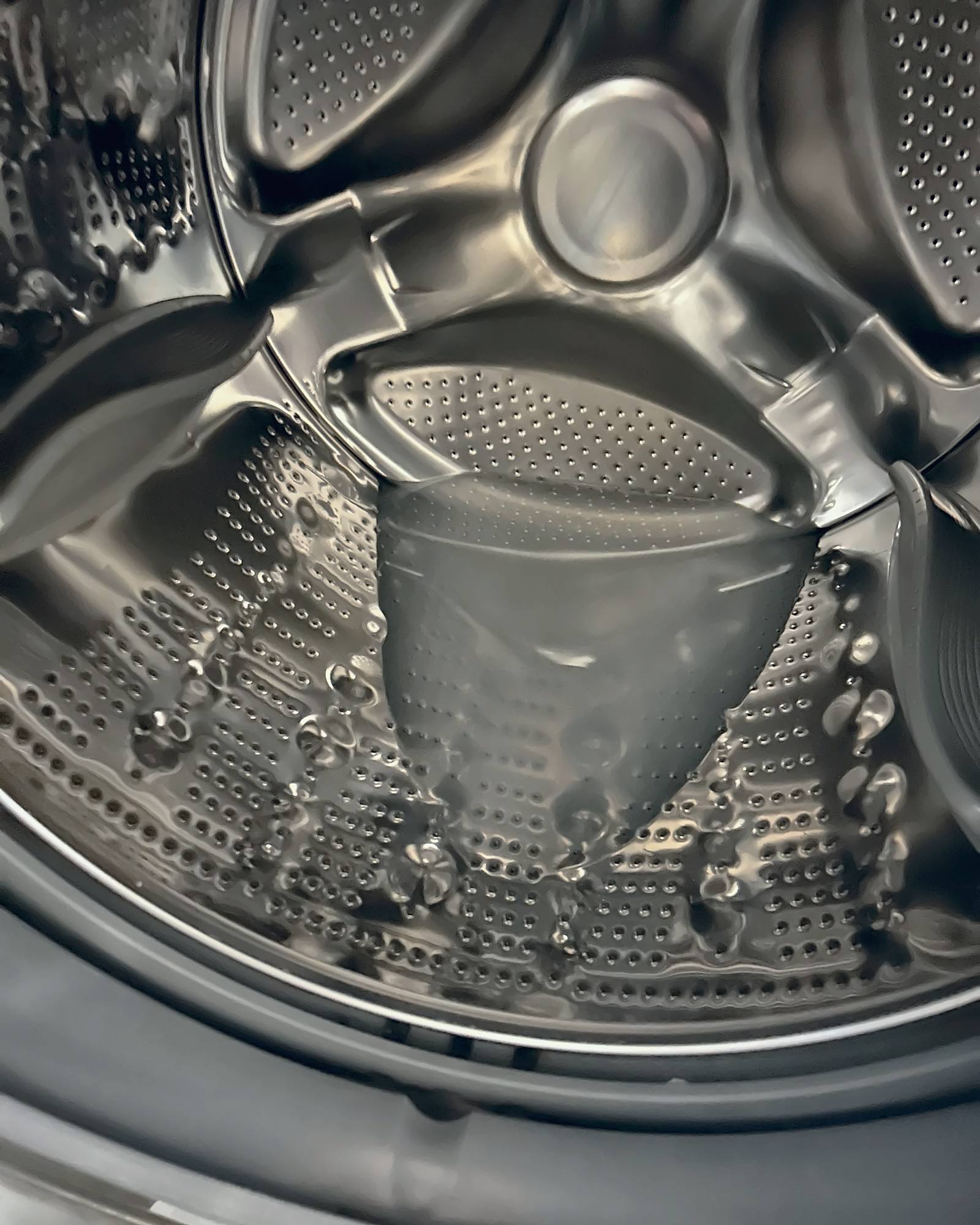
A washer that will not spin usually has a reason to refuse rather than a broken motor. The most common causes, in order, are an unbalanced or overloaded drum, a drain problem (the washer will not spin until the water is out), a lid or door lock that does not engage, and too many suds. After those come worn parts: the drain pump, lid switch or door lock, drive belt or motor coupling, and the drive motor or control. The load, the cycle, the drain hose and a front-loader’s pump filter are safe to check yourself.
Why won’t my washer spin?
Every washer drains before it spins. Samsung puts it plainly: if the washer is unable to drain, it never moves to the spin step. It also will not spin with the lid or door unlocked, or with a load it senses is off balance. Whirlpool’s drain-and-spin guide lists the causes in this order:
- Lid or door not closed. The lid or door switch lets the washer run only when it is shut.
- Unbalanced load. One heavy item, such as a bath mat, a duvet or a pair of jeans, can stop the spin.
- A gentle cycle. Delicate and hand-wash cycles spin slowly on purpose and leave clothes wetter.
- Too many suds. Excess detergent stops water pumping out, so the washer will not spin.
- Drain hose. A kinked hose, or a standpipe outside Whirlpool’s range of 76 cm (30 in) minimum and 244 cm (96 in) maximum height.
- Clogged pump filter on front-load washers. Coins, hair ties and lint collect in front of the pump.
Is it different on a front-load and a top-load washer?
Front-load washers keep the door locked while there is water inside, so a washer that will not drain also will not open. Most have a small access panel at the bottom front with the drain pump filter and a short drain tube. That filter is the single most useful check on a front-loader.
Top-load washers, especially high-efficiency models without an agitator, lock the lid before spinning. Whirlpool explains that the lid lock engages whenever the tub moves because the tub can spin at very high speed, and that clothing, lint and detergent build-up can stop the lid locking. Repeated clicking with no spin often means the lock cannot confirm it is latched. Older top-loaders with a belt drive can also lose spin to a worn belt or a failed motor coupling.
| What you notice | Likely cause | Safe to check yourself? |
|---|---|---|
| Clothes bunched on one side, error or thumping | Unbalanced load | Yes |
| Water left in the drum | Drain hose, pump filter, pump | Hose and filter, yes |
| Lots of foam in the drum | Too much or non-HE detergent | Yes |
| Top-loader clicks, lid lock light flashes | Lid lock or strike | Clean it, yes |
| Drains fine, drum hums but will not turn | Belt, coupling, motor or control | No, call a technician |
What can I safely check before calling?
Unplug the washer before you touch the pump filter or hose. A front-loader will release water when the filter is opened, and it may be hot.
- Rebalance the load. Spread the clothes evenly, take out a few items if it is packed, and run a spin-only or drain-and-spin cycle.
- Check the cycle. Make sure a delicate or no-spin option is not selected.
- Look for suds. If the drum is foamy, run a rinse with no detergent. Use HE detergent in an HE washer, measured as the label says.
- Check the drain hose behind the washer for kinks, and that it sits in the standpipe without being pushed too far down.
- Front-load: clean the pump filter. Put a shallow tray and towels down, drain the water through the small tube if your model has one, then unscrew the filter slowly and clear it. Your manual shows where it is.
- Top-load: clean around the lid lock and strike with a damp cloth, and check the strike on the lid is not cracked or loose.
- Samsung only: Samsung suggests running Calibration mode after a drain problem is fixed. Your manual shows how.
When should I leave it to a technician?
- Any job that needs the cabinet or back panel off: the drain pump, the lid switch or door lock, the belt, motor coupling, drive motor, or control board.
- Moving or tipping a washer that still has water in it.
- A burning smell, a tripped breaker, or water leaking from underneath.
What does a technician test?
A technician reads any error code, runs the washer’s service test mode, and follows the sequence: does it drain, does the lock engage and report back, does the motor get the signal to spin, and does the drum turn freely by hand. The drain pump, lid switch or door lock, and motor are checked with a meter. On a belt-drive or direct-drive top-loader, the belt, coupling or clutch is inspected. On a front-loader, the tub bearings are checked for noise and play, because worn bearings are a larger repair and change the repair-or-replace decision.
How much does it cost to fix in Toronto?
Common washer repairs, such as pump, door-lock and spin faults, are estimated at $180–$450 including parts and labour, plus HST. That is a planning range, not a diagnosis, and major drum work, such as bearings, may cost more. The diagnostic visit is $89 + HST, waived when you go ahead with the quoted repair, and you get the quote before any repair starts. See washer repair for the brands we service, including Samsung, LG, Whirlpool, Maytag and GE.
Repair or replace?
A lock, pump or belt on an otherwise sound washer is usually a contained repair. Tub bearings, a cracked tub or a failed drive motor on an older machine make replacement worth weighing against the quote. The diagnosis tells you which case you are in.
When should I stop using it?
- Stop if the washer shakes violently, walks across the floor or bangs during spin.
- Stop if water leaks onto the floor. Unplug it and turn off both taps behind it.
- Stop if you smell burning or the breaker trips.